
About us
A passionate designer and 3D printing expert at your service
Research
Research into 3D printing focuses on optimising materials, manufacturing techniques and software to improve the precision, speed and durability of printed objects. This includes exploring new polymers, metals and composites, as well as developing technologies such as multi-material printing and large-scale additive manufacturing. The aim is to push back the boundaries of design and production, opening up new possibilities in sectors as diverse as aerospace, healthcare and automotive.
Development
Development in 3D printing focuses on transforming innovations from research into concrete, marketable applications. This includes improving production processes, developing more efficient machines, and creating intuitive software to facilitate design and printing. Development is also focused on making these technologies accessible to a wide range of industries, optimising costs and incorporating environmentally-friendly solutions. The aim is to adapt technical advances to real market needs and stimulate widespread adoption.
Innovation
Innovation in 3D printing aims to push back existing boundaries by exploring new ideas, methods and applications. This involves integrating emerging technologies such as artificial intelligence, hybrid manufacturing and 4D printing, where printed objects can change shape after production. Innovation also seeks to solve complex challenges, such as printing biological structures for regenerative medicine or manufacturing ultra-light parts for the aerospace industry. By redefining what is possible, innovation stimulates not only the evolution of technology, but also new economic and social models.
Jean-Eudes: Passion for 3D Printing and Drone Design
Hi, I’m Jean-Eudes. I’m passionate about bringing ideas to life through 3D printing. From digital design to final prints, I work with both standard (256x256x256mm) and large-format (500x500x500mm) printers, which lets me tackle projects of various sizes and complexities. The ability to transform digital concepts into tangible objects continues to amaze me, and I’m constantly exploring new ways to push the boundaries of what’s possible with this technology.
In my professional life, I design and build custom drones for industrial applications. This involves the complete process – from software development to engineering and construction – creating specialized solutions for various big industries. Each project presents unique challenges that require specific solutions, making every day different and interesting. What I particularly enjoy about this work is how it combines multiple disciplines: programming, mechanical engineering, aerodynamics, and problem-solving all come together in creating effective drone solutions.
When I’m not working on these projects, you’ll find me in the FPV (First Person View) drone world. Building and flying these machines combines my love for technical challenges with the pure joy of flight. There’s something truly special about piloting a drone you’ve built from the ground up. The FPV community has taught me so much about pushing the limits of what’s possible with drone technology, and I’m always excited to share knowledge and experiences with fellow enthusiasts.
I believe in continuous learning and creating, always looking for new ways to solve problems and bring ideas to reality. Whether it’s designing a new drone system, testing flight capabilities, or experimenting with 3D printing techniques, each day brings new opportunities to learn and innovate. I find that the best solutions often come from combining knowledge across these different areas – sometimes a 3D printing technique can solve a drone design challenge, or drone engineering principles can inspire new approaches to 3D modeling.

The Revolution of Multicore 3D Printing

When I first discovered the power of multicore 3D printing, I knew I had found something game-changing—not just for seasoned makers, but for anyone curious about the future of production. Whether you’re an expert in the world of 3D printing or just dipping your toes into the realm of creativity, a multicore 3D printer with capabilities like printing objects up to 500mm³ is bound to catch your attention.
So, what makes these 3D printers stand out from the rest?
Efficiency Meets Precision
At the heart of a multicore 3D printer is its ability to multitask with unparalleled speed and accuracy. Unlike traditional single-core models that print layer-by-layer with one nozzle, multicore systems leverage multiple nozzles and advanced computing to optimize your build. This means faster prints, better detail, and minimal downtime. As someone who values both efficiency and quality, I can say it’s a revelation watching this machine in action.
Imagine printing a large, intricate model—say, a detailed architectural prototype or a life-sized sculpture—with pinpoint accuracy. And now imagine doing it in a fraction of the time it would take a standard printer. The difference isn’t just noticeable; it’s transformative.

Large-Scale Printing Without the Hassle
If you’ve ever felt limited by the size of a typical desktop 3D printer, the freedom to print up to 500mm³ opens up a world of possibilities. Think big. Whether it’s complex mechanical parts, furniture prototypes, or larger-than-life cosplay props, having that much build space removes creative boundaries. You don’t have to sacrifice detail for size either—multicore technology ensures every millimeter of your project is crafted with care.
I personally enjoy pushing the limits of my designs, and when I realized I could print something half a meter in every direction, my creative gears started turning like never before.


Softwares used
When I first ventured into 3D printing, I quickly realized that while the hardware is impressive, the real magic happens with the software. The tools we use to design and print 3D objects are where our ideas truly take shape. From sketching out a rough concept to printing a fully realized object, the software makes all the difference. Whether you’re a seasoned CAD designer or just starting out, you’ll find that intuitive software can turn even the most ambitious ideas into reality.
Streamlining Creativity
One of the key reasons I love using modern 3D printing software is how it simplifies the entire process from start to finish. The moment you open the interface, you’re welcomed by an intuitive workspace that makes it easy to visualize your design in 3D. Even if you’re not an expert, the software offers plenty of guides and presets that let you jump right in.
For me, it’s like having an assistant that understands both my technical needs and my creative flow. Whether I’m tweaking minute details on a small part or designing a complex multi-part model, the interface guides me through each step without ever overwhelming me.
CAD Design for All Skill Levels
Let’s talk about design. I love the freedom that comes with CAD (Computer-Aided Design) software. It’s the perfect blend of technical precision and creative flexibility. Whether you’re designing mechanical parts or artistic sculptures, the right CAD tool lets you create models with pinpoint accuracy. The best part? You don’t need to be an engineer to use it.
Technical materials used
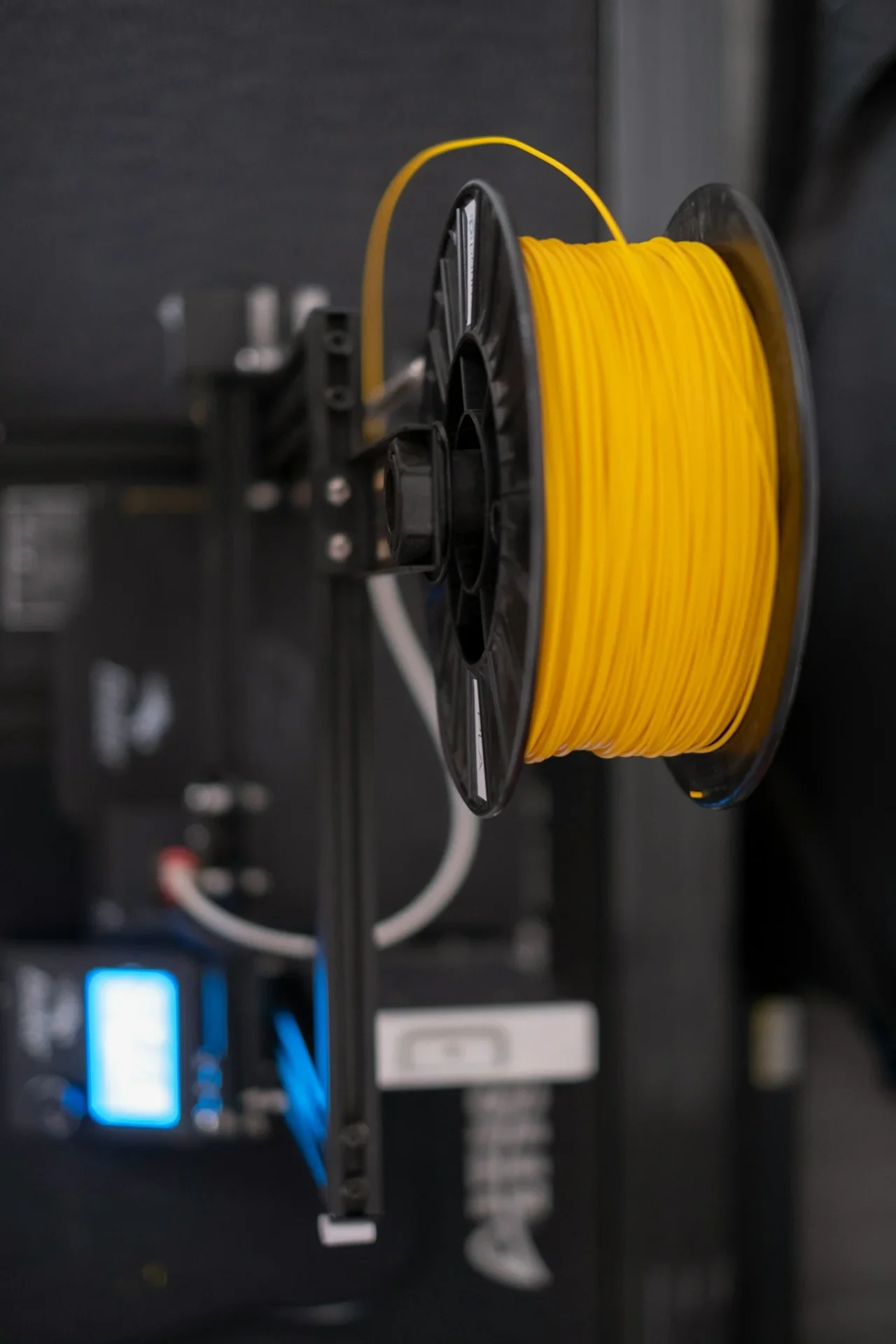
When I first got into 3D printing, one of the things that fascinated me most wasn’t just the machines, but the variety of technical materials used to bring designs to life. The moment I realized I could print in nearly any color or material, I knew my creativity had no limits. Whether you’re printing functional parts or artistic models, choosing the right filament can make or break your project. And let me tell you, the world of 3D printing materials is as exciting as it is diverse.
PLA: The Reliable All-Rounder
Let’s start with PLA (Polylactic Acid), one of the most commonly used filaments in 3D printing—and for good reason. It’s user-friendly, eco-friendly, and works great for a variety of applications. Whether you’re a beginner or a seasoned pro, PLA offers the perfect balance of ease of use and print quality. What I love about it is how forgiving it is—minimal warping, smooth prints, and no fuss. Plus, the color options are endless, so whether I’m printing a prototype or a decorative piece, I can always find the perfect shade.
One of the things I appreciate most about PLA is its versatility. It’s ideal for everyday prints, from hobby projects to detailed models, and it’s biodegradable, which means I’m doing my part for the environment while bringing my ideas to life.

ABS: Strength and Durability
If I need something that’s going to last—whether it’s a functional part for a machine or a durable prototype—ABS (Acrylonitrile Butadiene Styrene) is my go-to material. ABS is known for its strength and toughness, making it perfect for objects that need to withstand wear and tear. It’s slightly trickier to work with than PLA due to higher temperature requirements and a tendency to warp if not handled correctly, but once you’ve got it dialed in, the results are outstanding.
3D print best & modern objects
Discover a selection of modern and innovative objects, 3D printed with precision and creativity. Treat yourself to unique designs that combine aesthetics and functionality to meet the most demanding tastes.
