
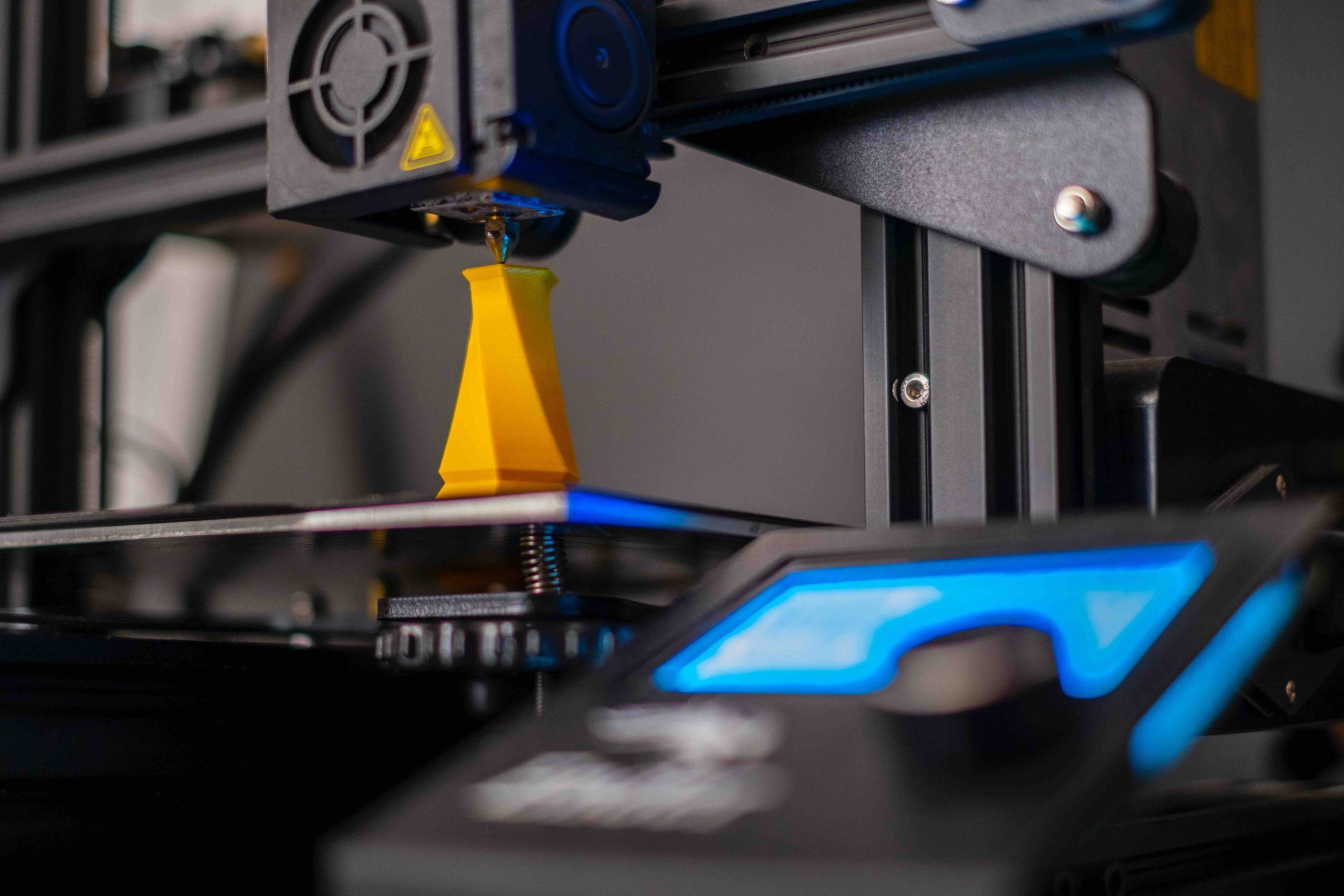

Revolutionizing the Future: The Unstoppable Rise of 3D Printing Technology
3D printing, also known as additive manufacturing, is increasingly seen as a cornerstone technology for future manufacturing, design, and engineering due to its versatility, efficiency, and ability to innovate. Here’s a condensed overview of why 3D printing is considered the future of numerous industries:
1. Customization at Scale
3D printing allows for high levels of customization without the cost penalties associated with traditional manufacturing methods. It enables the production of parts tailored to individual specifications, meeting the growing demand for personalized products in sectors like healthcare (custom prosthetics), fashion, and consumer electronics.
3. Rapid Prototyping
3D printing accelerates the design process by enabling rapid prototyping. Designers and engineers can quickly create, test, and modify prototypes in a fraction of the time and cost, speeding up innovation and reducing time to market for new products.
4. Complex Designs
The technology allows for the creation of complex and intricate designs that are difficult or impossible to achieve with traditional manufacturing methods. This capability opens up new possibilities in various fields, including aerospace, automotive, and biomedical engineering, where complex part geometries can provide significant performance benefits.
5. Supply Chain Simplification
3D printing has the potential to revolutionize supply chains by enabling on-demand production closer to the point of use, reducing the need for inventory, and cutting transportation costs and time. This decentralization of manufacturing could lead to more resilient supply chains.
6. Cost Reduction
For small production runs and complex objects, 3D printing can be more cost-effective than traditional manufacturing processes, which often require expensive molds and tooling. The technology reduces the barrier to entry for small businesses and startups by lowering setup costs.
7. Advancements in Materials
The range of materials compatible with 3D printing is continuously expanding, including plastics, metals, ceramics, and even biological materials. This diversification enables new applications across industries, from aerospace components to bioprinted tissues and organs.
8. Educational and Research Opportunities
3D printing fosters innovation in education and research by providing students and scientists with the tools to design, experiment, and create. This hands-on learning approach is invaluable for STEM education and for advancing research in materials science, engineering, and medicine.
9. Digital Inventory and Legacy Parts
The technology allows companies to maintain digital inventories, printing parts on demand rather than storing physical inventories. This is particularly useful for producing legacy parts for older machinery or vehicles, where the original manufacturing processes are no longer available.
10. Future Possibilities
As 3D printing technology continues to evolve, its potential applications seem almost limitless. Future developments could lead to more widespread use in construction, with 3D-printed buildings and infrastructure, and in space exploration, where it could be used to manufacture tools and habitats from local materials on other planets.
In conclusion, 3D printing stands at the forefront of manufacturing innovation, offering unparalleled flexibility, efficiency, and potential for customization. As the technology matures and its adoption widens, it is set to redefine manufacturing, design, and engineering processes, making it a foundational technology for the future.
0 Comments